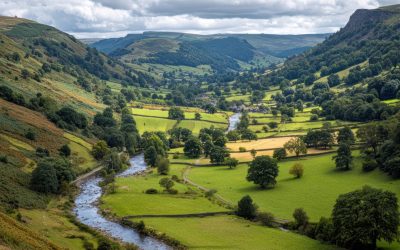
Alec Clouting is a farmer who manages a diverse 300-acre farm in Surrey, England. The farm comprises 220 acres of grassland, 80 acres of woodland – grazing sheep and cattle.
Our conversation on the naturethrive podcast focused on how a farmer can produce the food we need while still being a passionate steward of nature.
Beyond the Tractor: The Modern Farmer’s Dual Role
Alec’s life on a smaller farm is incredibly diverse; one day he’s a stock worker, the next he’s fixing a pump or looking at the accounts. But what really drives him is his purpose, which goes far beyond just growing food:
“We are food producers and we are managing a landscape… we want to leave that in a better state than we found it.”
Regenerative Farming: How do we Transition
For Alec, the health of the land correlates to the health of the farming business. He’s a huge advocate for regenerative farming practices.
The Low-Hanging Fruit: Saving Money by Helping Nature
Alec’s farm shows how small, strategic changes can deliver both ecological and financial rewards:
- Rotational Grazing is Cheaper: By moving his mixed flock of cattle and sheep onto fresh pasture daily, the system naturally disrupts parasite cycles. The result? Zero worming costs for his lambs over the last five years! That’s a huge net cost saving achieved simply by letting the grassland and the animals behave more naturally.
- Hedgerows are Essential Infrastructure: Alec knows that a healthy, wide hedge doesn’t just look nice; it holds soil, prevents erosion, shelters livestock, and harbours beneficial insects. When schemes offer funding for management, it’s a win-win, showing how nature preservation directly supports farm resilience.
- Mixed Farming Makes Sense: Even on arable land (which Alec doesn’t focus on), he sees the benefit of getting paid to plant cover crops through schemes like the Sustainable Farming Incentive (SFI). Bringing in a sheep farmer over the winter for grazing builds soil organic matter, improves fertility, and increases water retention—all benefits that drastically improve the long-term productivity of the land.
The clear message here is that the most powerful regenerative changes are those where the business case for food production and the benefit to biodiversity perfectly overlap.
New Capital: Funding Nature’s Recovery
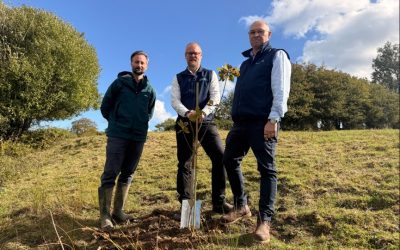
The conversation naturally turned to new funding avenues. The replanting of 8,000 mixed native species trees across 30 acres of woodland following ash dieback was a massive project, and it was almost entirely funded.
- Resilience Pays: The use of 15 different species was a conscious strategy to build resilience against future disease—a lesson sadly learned from the rapid loss of ash.
- Management is Key: Crucially, the funding covered the ongoing hard work of maintenance for the first five years, including managing the dense undergrowth and controlling problem populations like deer and non-native grey squirrels to give the saplings a fighting chance.
- Corporate Support: Alec also saw the benefit of philanthropic support, hosting corporate groups for team-building tree-planting days—an easy flow of capital and labour that businesses are keen to support.
How Biodiversity Net Gain can help build more resilient farms
For landowners, the new mandatory Biodiversity Net Gain (BNG) rules present a huge opportunity. Because developers must achieve a 10% gain in biodiversity, they need sites to buy offsite biodiversity units. This creates a clear, market-driven financial path for farmers to turn non-productive land into high-quality habitat, making nature restoration a core revenue stream.
Alec believes the biggest driver of uptake will be building trust within the farming community. When farmers see their neighbours getting good results and stable income from these schemes, the snowball will turn into a landslide.
The Long View: Farming with Perspective
One of the most profound moments of our chat was Alec’s reflection on time. While farmers are often forced to think in short, annual cycles to cover costs, the health of the land demands a generational view.
“The land is a slow heartbeat… it’ll be here after we’ve gone. You can’t manipulate it into doing what you want to do immediately.”
Listen to this episode on any platform you get your podcasts on by searching the naturethrive podcast.